My Controversial Stress Fracture

My legs ache today, but that’s okay. I’m tired, that’s okay too! My knee is niggling again, don’t worry, you’re a runner! This was my day in, day out conversation I had with myself. Reassuring that running was the reason I was aching and sore, but that’s okay, it’s all apart of the process! It’s showing my effort and training is challenging me, so that’s good, right?

Probably all runners feel like this some days, and if they’re smart enough they may take it easy, or get an early night, eat substantially and fuel their bodies in able to aid recovery in order for them to perform at they maximal potential. It has only taken me till recently that being sore and tired isn’t normal for runners. I shouldn’t be getting out of bed absolutely shattered. It wasn’t running that was the reason for this, it played apart but not under and inadequate fuelling and recovering effectively was a recipe for what I feared, a stress fracture.

Weeks of fuelling properly went by, I began to get Edema in my legs and stomach, which is the body’s way of healing by sending a lot of fluid to areas of the body which are damaged and to no surprise my legs where swelling, and stomach where my organs sat had so much fluid my confidence started to sink (pardon the pun).  I began to restrict, I wasnt ready for this, the thought of recovery was there but as a result my weight was increasing rapidly, so i began to fall into the Red-S syndrome category once again.

I began to get niggles (again), especially in my knee. It would swell, encounter stabbing and shooting pains and my leg would lock, but it only then became too much of a ‘coincidence’.

The warm up for Leeds abbey dash was mixed, a painful jog to feeling springy and speedy in strides. A costal first half of the 10k route to an agonising end of cramping calf and stapping knee pain, numb tingling feet and light headedness. Don’t get me wrong, no one can complain with a 50second PB! But when you know you’re capable of so much more its okay to be a little disappointed. I saved my cool down till I got home, and all was fine! An 8mile ‘recovery’ run the next evening, a little tight but that’s okay (so I thought) and then an agonising evening of hobbling and leg locking. But I was adamant I could run, so I tried the next morning. I couldn’t even walk but for some reason I thought I’d be able to, but no, it hurt. An distressed call to my physio (Phil) and he made time to see me the following morning, to where he saw chronic bruising, swelling and heat along with a change of mindset, it caused a red flag to be raised. Throbbing to touch, an ultrasound test didn’t go down too well, to where he stated he was contemplating diagnosing a ‘possible stress fracture’.

I wasn’t able to run? And for once I actually decided to listen to him. Laps of the pool, rehab work and miles on the bike encountered my training for the next few weeks, and no running meant a slip in my eating. So I wasn’t healing.

I went back to see him, by this point I opened up about my struggle, I’d fallen back down to rock bottom. I knew if I was going to run again I’d have to start repairing my broken body with the most natural medicine possible, food.

Pints and pints of milk, protein and carbs were next on the agenda, a lot of tears were shed, but with this the only way, it HAD to be done. It was like I was restarting my entire life again, for the third time. Retraining both my mind and body that food was actually a necessity and at a much higher quantity for my training and especially more than ever right now! Relearning instincts us humans have had since the start, something I was so adoment I didn’t need, because after all, I’m a runner, I’m invincible right?

8 weeks later, WE did it. The pain began to ease and saying that – I was soon back up to full mileage after weeks of cross training and you guessed it, FOOD! I could complete sessions again and go for a run the next day pain free. I finally began to feel the benefit of sleep!! And most importantly, my confidence began to return. I finished 6th at Northern XC Champs, 19th at Nationals and have since knocked another 40 seconds off my 10k Pb!!! One stone heavier, I guess it’s treating me well!

Its become so apparent to me that if I even slip up for one or two days by my eating dropping – whether that be on purpose or not, I get niggles, my knee swells, aches and my achillies now begins to flare-up. I know my warning signs, which reminds me that food is actually way more important than the miles I run in order to progress and not head towards another period of injury.

A stress fracture is one of the worst possible news to athletes, not just runners. However, to me, a blessing In disguise. It has taught me an awful lot! You can’t just run miles and miles, you have to fuel, you have to strengthen, and most importantly, you have to live. Running is a huge part of my life, but you know what, you have to take a step back, breathe reality and enjoy the life you have. Spend time doing what YOU enjoy, what makes you happy and healthy. Don’t get too caught up in a game that in grand scheme of things, is only a bloody good hobby!

Your health and happiness comes first.

And to be HAPPY, I do need to run. I can’t lie, it’s my identity –  So to run, I need to be HEALTHY!
843B12D7-8562-4A9D-B6D5-E0CE328887E7
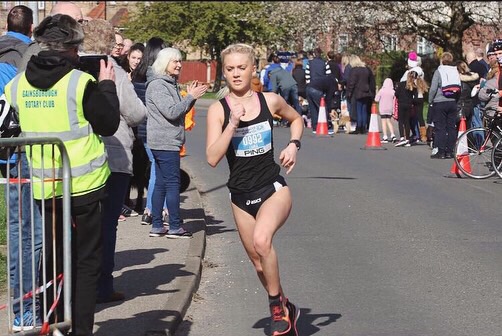
Gainsborough 10k March 2019 – 36:06


Should there be specialist eating disorder clinics for athletes?

Eating disorders is such a heated topic in many sports, and the reason why people, like me, struggle to come to terms with accepting help from mental health specialists. The idea of possibly accepting inpatient treatment without the ability to run really made an impact on my recovery, as I couldn’t imagine not running as that was not only my passion at the time, but a coping mechanism to escape the illness which had taken ahold of me. For many runners, the idea that ‘lighter is faster’ became such a focus in order to develop in an athletic career, but creates such a controversial impact on both physical and mental performance and recovery.

Running from the age of 10, I looked at the sport as a passion, yet at 16 years old when I was diagnosed and referred to an eating disorder unit, my love for running remained and I was determined more than ever to achieve quality performances in both 5k/10k and cross country races. Many of the professionals I have seen in my 3years of attempting to recover, they have referred my running as a way that ‘Anna’ has tricked me into a way in which I must train in order to compensate for meal times and any form of calorie intake I had that day. Yes, part of that is true and I’m not going to lie. I did use my running as a way to burn off calories in order to lose weight, and still do, but my main focus was that I was seeing a vast improvement in my performance, and began to achieve the ‘athletic figure’ I as a teenage girl had always desired to have.

When I was at my lowest, competing and training was very challenging as I struggled to fuel myself properly for such a demanding sport. Id go for runs and training sessions without any food, and struggle to eat after in order to recover. But the other factor which effect me was the weather. After doing my usual warm-up, athletes are funnelled into a start where there is no ‘turning back’. Id race in my usual shorts and crop top, but having to stand in close to sub 0 temperatures, it made my warm up a useless process. But of course at the time, I didn’t realise that, I was just absolutely frozen, and yet convinced I was absolutely fine as I saw myself  the same as all the other girls in my age group. This is because I had a body distorted image however never got the help I needed to focus towards a healthy athletic figure, just a generalised figure focused around BMI and ‘curves’.

That is why I think UKAthletics and England Athletics should introduce specialised units for athletes beginning to, or currently struggle with an eating disorder. It shouldn’t just be for your coach to deal with, and even training partners to feel they need to help! They aren’t trained to support mental health. Yes I think they should have the ability to attend courses of recognising and supporting athletes with eating disorders. There should a place for up and coming athletes of all ages to feel they will be understood as an athlete, not just an exercise addict because of mental health. I feel that there should be even just one day patient and inpatient for athletes who struggle with anorexia/bulimia, but can still train in a way to maintain their passion in an environment which they feel understood and help aid recovery. Nutrition courses and a reason to recover focused around the sport, showing the different impacts and restrictions eating disorders cause and effect so many athletes. I have seen so many girls in my age group suffer with what I believe anorexia, and having to deal with it myself is something I could never have possibly imagined. They come and go with injuries, but you can tell they are just so determined like me to take their passion to a higher level, but I find it hard to take heath professionals seriously when they say the first thing I need to do is quit running. Its not going to happen. If I was in an environment where I was around boys and girls exactly the same as me, budding athletes that can’t imagine not going out for a run, I would find my recovery so much easier to accept, and probably with the support of other athletes around me, begin to accept what ever way it takes to recover, it will benefit my running performance.

I have never had a good concept for money, I guess its from my parents tricking me and my brother into thinking this weirdly shaped tree at the bottom of our house was called the money tree, and said thats how they paid for things, but surely just £1 of all membership fees can be put into starting to raise money for a specialist ED unit in athletics be introduced. Somewhere where athletes struggling with their mental health can be encouraged to recover from a sport performance point of view. Wanting to better performance in athletes is such a diverse recipe, you can’t write a step by step guide on how to be the next Mo Farah, Paula Radcliffe or Michael Duane Johnson. Each individual is very much different. Different training plans and approaches work for different athletes, but at least having the support of others who have the same goal, same passion, will motivate and even help prevent a serious loss in the athletic world because they struggled to accept help as they where told to just ‘quit running’ in order to recover.